The pandemic
Entering into 2020, KU is preparing to celebrate its 125th anniversary and implement its new Strategic Plan that would guide it through to 2022. Across Australia, communities are beginning to recover from devastating bushfires and floods when a challenge of an entirely different scale emerges. One of the defining moments in KU’s history, the COVID-19 pandemic has an immediate and significant impact across the organisation, and within weeks KU’s priorities shift.
In March, as restrictions and ‘stay-at-home’ rules are announced, equipment is rapidly relocated to enable office-based staff to work from home. KU’s Central Office and other offices in NSW, Victoria and Queensland close, with only a very small skeleton staff remaining at Central Office. Most KU services are classified as ‘essential services’ and continue operating, whether children attend or not.
An Executive and Crisis Response Team is formed to coordinate KU’s response. Meeting at least daily in the early stages, and later every weekend, the team works to process and implement the enormous volume of rapidly changing health advice, gather data on COVID-19 cases across KU, manage government reporting and coordinate notifications to services and families.
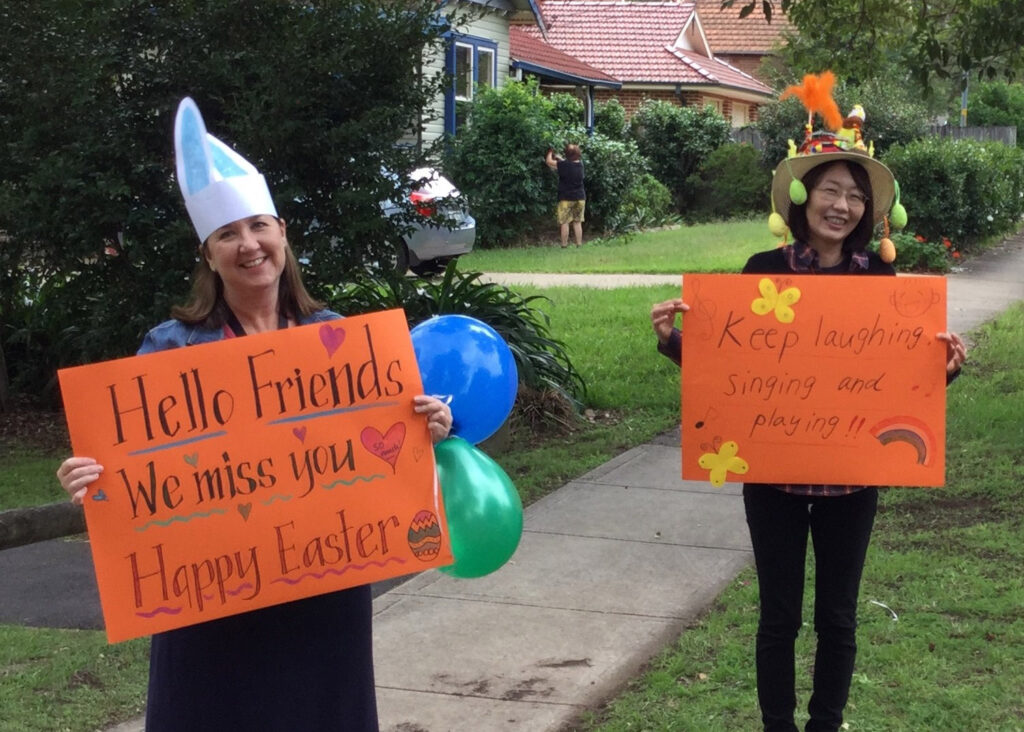
The nature of service delivery changes dramatically, with KU pivoting to offering online learning sessions for children unable to attend in person. Educators find new ways to maintain relationships and continue supporting children learning at home, preparing activity and learning packs, sharing songs and stories through Storypark and video, and even organising ‘drive by’ days so children can see their educators from the footpath.
Protecting children and staff is a priority from the outset. KU introduces and regularly updates COVID-19 risk management and COVIDSafe plans, and publishes several resources to support children, families and staff to navigate the changing circumstances. Measures include limiting the number of adults entering services, adapting everyday routines and activities to reduce the risk of transmission, and the distribution of thousands of masks and, later, rapid antigen tests.

Staff wellbeing is another focus. Regular communication becomes critical, with frequent updates keeping staff informed. Staff are regularly surveyed about the support they need, and wellbeing resources are developed in response to their feedback. With the assistance of the Commonwealth Government’s JobKeeper funding and other government support, KU is able to ensure job security for its more than 2,000 employees.
As government funding replaces much of the usual fee income, KU eliminates or heavily reduces fees for families. The unexpected surplus generated in 2020 is subsequently reinvested in 2021 to waive gap fees for families.
The second year of the pandemic brings lengthy lockdowns in Melbourne and Greater Sydney, lasting 110 and 107 days respectively, placing an immense toll on children, families and communities. Maintaining connection and wellbeing becomes more needed than ever. KU’s services respond with resilience and innovation, embracing technology and embarking on projects such as ‘Spoonville’ villages, community bear hunts and letter exchanges. KU also uses the opportunity to fast-track the upgrade of its Central Office while staff are working from home.

COVID-19 vaccination becomes central to Australia’s pandemic response and is made mandatory for all early childhood education and care staff in NSW, Victoria and the ACT. A small number of KU staff choose to leave the sector as a result.
KU’s postponed 125th anniversary celebrations are finally marked in 2021 under the theme ‘Yesterday, Today and Tomorrow’, with KU services undertaking projects and ‘acts of kindness’ to celebrate. KU presents five short films to conclude the celebrations.
As restrictions ease in 2022, staff fatigue and shortages become significant pressures across the sector. The resumption of face-to-face programs and increased contact with the community bring higher levels of COVID-related absenteeism. KU’s Permanent Relief team and KU casual staff help fill the gaps, ensuring familiar faces provide continuity of care to children and families.
By the end of 2022, KU has navigated three extraordinary years with its systems tested, its ways of working evolved and a renewed confidence in its ability to adapt.
Allied health
Despite the disruption of the COVID-19 pandemic, KU progresses plans to introduce a new allied health program in response to growing demand for support for children with developmental concerns, developmental delays and disabilities.
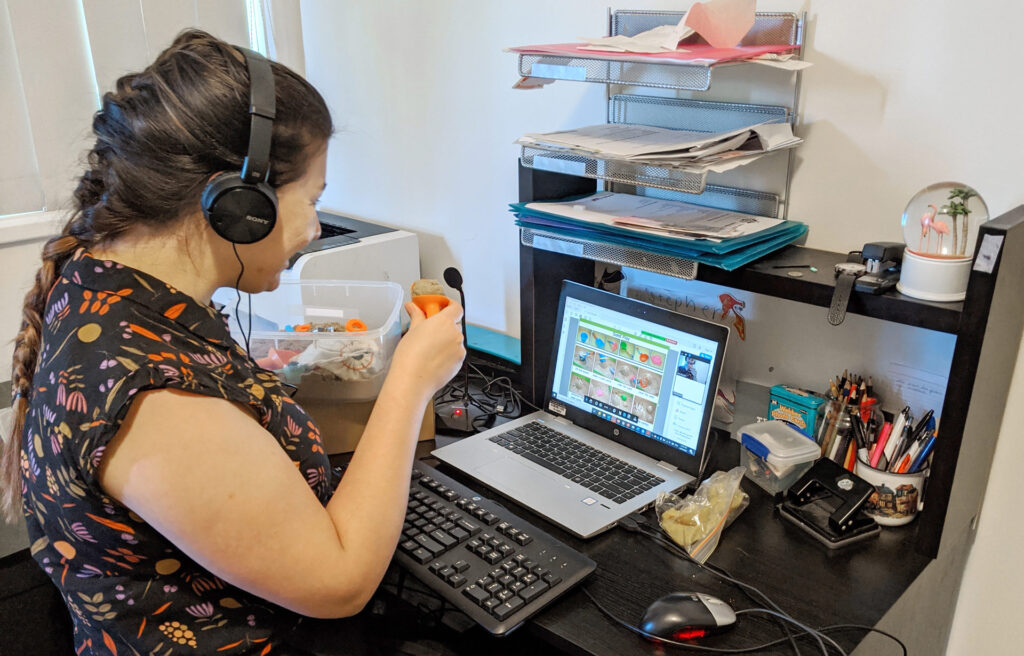
Following a review of local demand, allied health services commence at two of its NSW preschools in 2020. Speech therapy and occupational therapy are offered to children under the age of seven, both within KU services and the local community. Due to social distancing restrictions, face-to-face sessions are put on hold, and KU turns to telehealth to enable children and families to access support remotely.
In 2022, the KU Marcia Burgess Foundation introduces an initiative to help families experiencing financial vulnerability access assessments and services provided by KU’s Allied Health and Early Childhood Intervention Programs. The initiative helps to alleviate financial pressure for families and supports children with additional needs to receive support they might otherwise be unable to access.
KU Marcia Burgess ASELCC and Autism Support Team
With the withdrawal of Commonwealth funding for the KU Marcia Burgess Autism Specific Early Learning and Care Centre (ASELCC) at the end of 2021, some aspects of the service are amalgamated with KU Liverpool Preschool to form a single 50-place preschool in 2022.
The preschool retains the Early Start Denver Model (ESDM) component of the ASELCC program, offering intensive learning groups, speech therapy and ESDM clinics.
Three ESDM Certified Therapists from the former KU Marcia Burgess ASELCC form an Autism Support Team, bringing their specialist expertise to support KU services to implement inclusive programs and equitable outcomes for children diagnosed with, or undergoing assessment for, autism spectrum disorders.